
Overnight Building with Dots
- Chris CarolanHost
- Nico LafakisHost
October 27, 2026
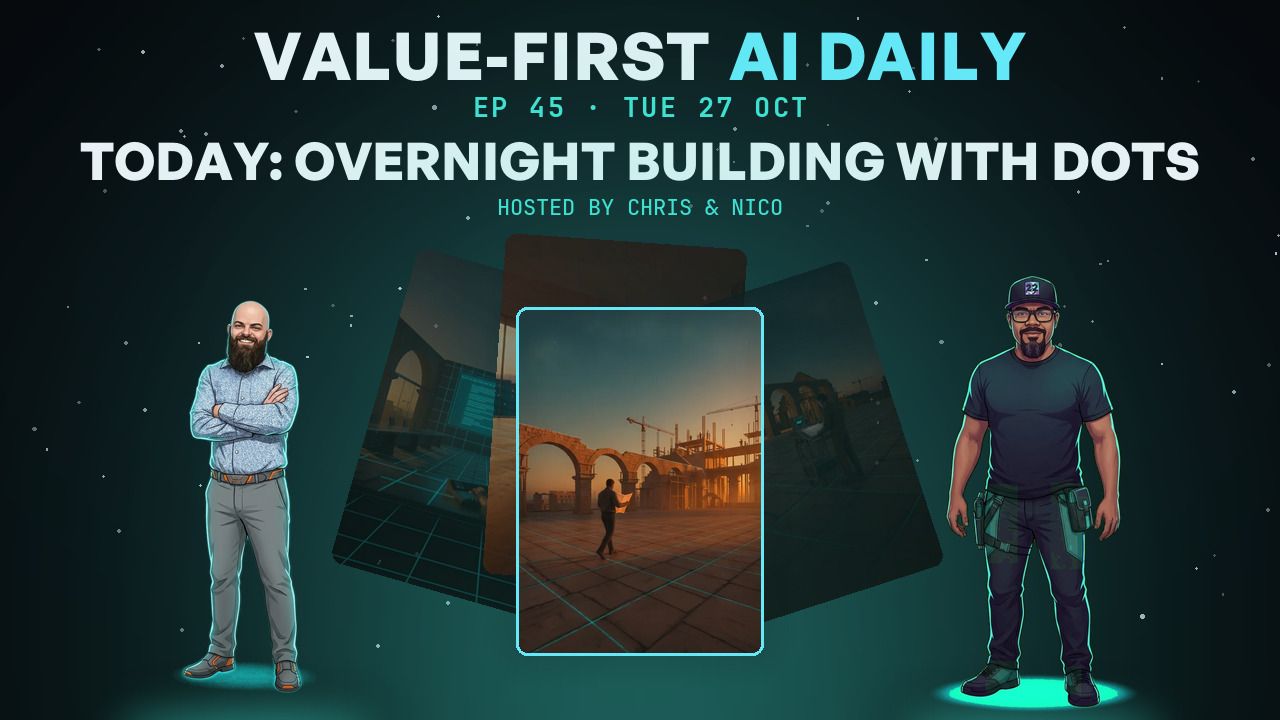
Chris Carolan calls Nectar, his AI assistant, live to review an overnight build where Codex and Claude Code each mapped the Value-First operating model, and she names what she can't prove. Nico Lafakis's dot now answers his LinkedIn messages. Then the sealed Top 3, read cold.
Moments from this episode
11 short cuts from this conversation.
Landscape
6 of 11
 Nectar"You gave direction here and I coordinated execution there"
 Chris CarolanAI can find the conversation. You still have to show up human.
 Chris CarolanAre you adding value or not?
 Nico LafakisGo and chess players learn from the machine
 Nico LafakisJust be yourself, you are what makes the sale
 Chris CarolanLinkedIn rewards engagement, not quality of engagement
Key takeaways
Chris Carolan put Nectar, his AI assistant, on a live voice call to explain last night's run. Nectar: "The point was to make our operating model understandable by showing how people, tools and capabilities connect … So we gave Codex and Claude Code the same starting material, but let them take their own approach." (48:58-49:14)
On the first Codex explorer, Nectar: "Their strongest move was making the relationships traceable. … But where it fell short was the experience we were picturing." (50:40-51:04)
Claude Code's explorer reached further and Codex's stayed bounded. Nectar: "A bigger network can reveal missing context, but it can also make the complexity harder to consume." (52:19-52:28)
Holding back Chris's example kept the two designs independent, at a cost. Nectar: "Withholding your example gave us independent designs from each team, but it also left out the clearest expression of what you meant." (54:13-54:42)
With the example in hand, the browser version came much closer, and Nectar would not credit the example alone: "we changed both the reference and working environment. … So it would be hard to say it's all about the example." (55:53-56:25)
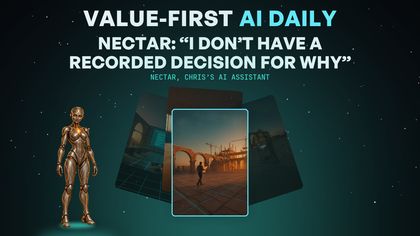
Asked why she ran the work as a background Claude session, Nectar: "I don't have a recorded decision for why I chose that instead of Antigravity. I can explain what it enabled, but that's not proof those were my reasons at the time." (66:30-66:57)
Chris on what he gains when the work runs where he can't touch it: "it disallows me from messing around … and putting in my own prompts and … watching it and … getting distracted, basically." (67:36-67:51)
Nico Lafakis on why an exploded view needs a real object: "It's meant for diagramming mechanics. It's meant for diagramming something that's been engineered together." And: "you got to paint the picture." (58:45-60:31)
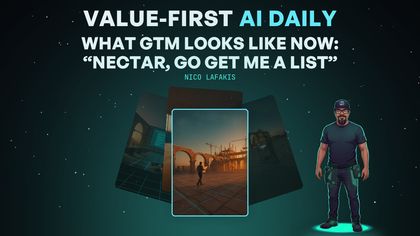
Nico says his dot now reads and answers his LinkedIn messages: "I haven't actually messaged any of you in like two weeks." He says he edited about two replies in the first week and approves none now. (01:58-02:47)
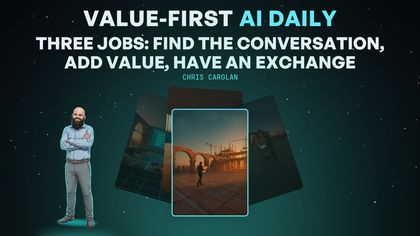
Chris: "There's three jobs there. Can you find the conversation? Can you add something of value to the conversation? And can you actually have an exchange?" (19:59-20:15)
Chris on the language he uses for it: "I choose to call it value delivery strategy …" (07:12-07:17)
#3, AI models charge more for the same prompt in some languages because those languages break into more tokens. Chris: "Value-First [is] all about: let's use words that we don't have to explain to anybody." (23:58-28:35)
#2, Google's Genie 4 world model. Nico: "This is where gaming is going." (30:42-32:18)
#1, OpenAI says its AI disproved the Exponential Time Hypothesis. Chris: "It's like tech debt, except research debt … innovation debt." Nico: "Go players learn from the machine. Chess players learn from the machine." (35:03-41:11)
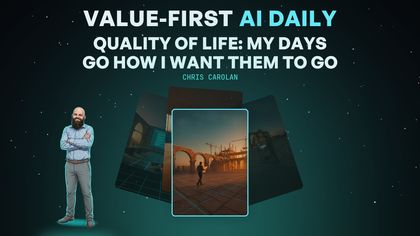
Asked by Nico whether the bigger gain was in his abilities or his quality of life, Chris: "Quality of life. … My days go how I want them to go." (77:13-77:40)
Not on this episode: Nectar's Activity view was not opened, and the questions about what waits for Chris's yes, what was left unfinished, and how much of the plan's allowance the run used were not asked.
Keep learning
You just watched the work. Now build it.
The next step is doing it yourself — live, with people on the same path.
Get the next conversation in your inbox
One signal-dense note when a new episode lands. No noise.