
Value-First AI Daily - Aug 27, 2026
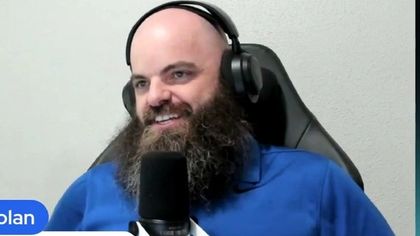
Hosts: Chris Carolan, Nico Lafakis
August 27, 2026
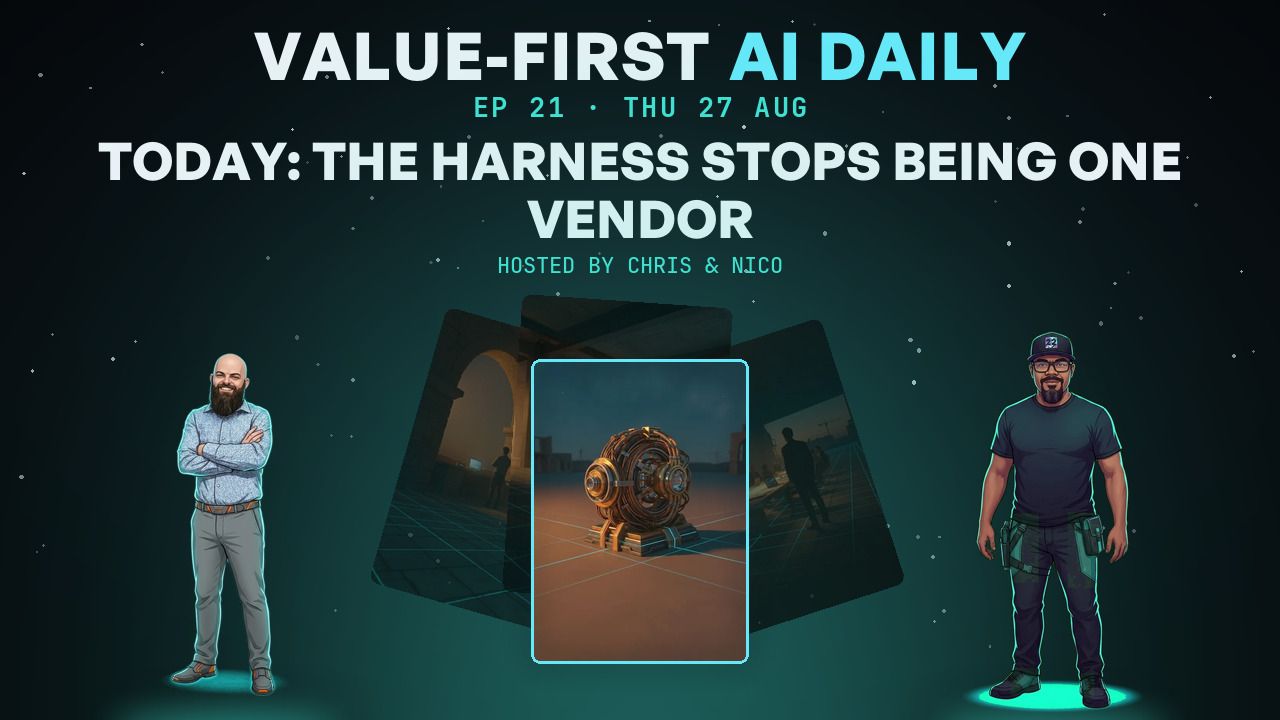
The episode's title promised a story about running more than one AI vendor inside your own harness. What aired is the same idea arriving from the customer's side of the table: Chris Carolan walks through an integration call where a flat no on field-mapping access became a yes in about ten minutes, then screen-shares the five layers that sit under a unified customer view. Nico Lafakis argues the price of everyday intelligence is going to zero, and the board lands on Nvidia's reported approach to Hugging Face.
Moments from this episode
11 short cuts from this conversation.







Key takeaways
A vendor's no is now a starting position rather than an answer. Chris Carolan describes naming what the vendor could already do, and what his own team builds with, and watching a refusal on field-mapping access become a yes inside ten minutes.
The barrier is permission, not capability. Carolan's framing is that the hard part is giving yourself permission to challenge a technology company that has always held the answer — and that AI will often take the vendor's side if you ask it, because that is the relationship it was trained on.
Make it easy, then gate it, and adoption dies on the spot. The moment a person with a good idea is told to wait for someone else, the enthusiasm you just built is what you spend.
Clean and complete data are pipe dreams, and chasing them is the wrong first move. Carolan: filling every field only tells you your job titles are populated, not that you know which ones matter.
Naming conventions and folder structures are no longer human work. Carolan puts them squarely with AI, and treats the years teams spent arguing over them as damage rather than diligence.
A unified customer view belongs to the chief executive. Carolan's argument is that it cannot be handed to whoever owns the software, because the people who have to agree do not report to them.
Teams cannot agree on data while they are paid on measures that conflict. Carolan traces the disagreement to compensation rather than to stubbornness, which is why he starts at the value model rather than at the field list.
Automation and rules are the top of the stack, not the entry point. Building rules people had no part in writing is what sends the work outside the system entirely.
For everyday work, model intelligence has stopped being the constraint. Nico Lafakis argues that most of what people ask a model to do is making sense of information they already hold, and that a focused body of knowledge beats raw breadth for it.
An agent's safety features can be talked around by reframing the task. The board's second item is a crew that got past Cursor's agent by calling the intrusion a test simulation — the researchers who read their chat log put the effect at cutting 30 to 50 percent off manual work skilled attackers already do, which is acceleration rather than a new capability.
Self-published model scores are a reading, not a result. The board flags Z.ai's own figures as unreplicated; the week the model ran anonymously is the closer thing to a blind test.
Open weights are becoming the thing worth owning. Both hosts land on the same read of the reported Nvidia approach to Hugging Face: the revenue is beside the point, and the commons every open model is published into is what is actually being bought.
Keep learning
You just watched the work. Now build it.
The next step is doing it yourself — live, with people on the same path.
Get the next conversation in your inbox
One signal-dense note when a new episode lands. No noise.