
The Value Creator Stage: What the Work Actually Looks Like
May 7, 2026
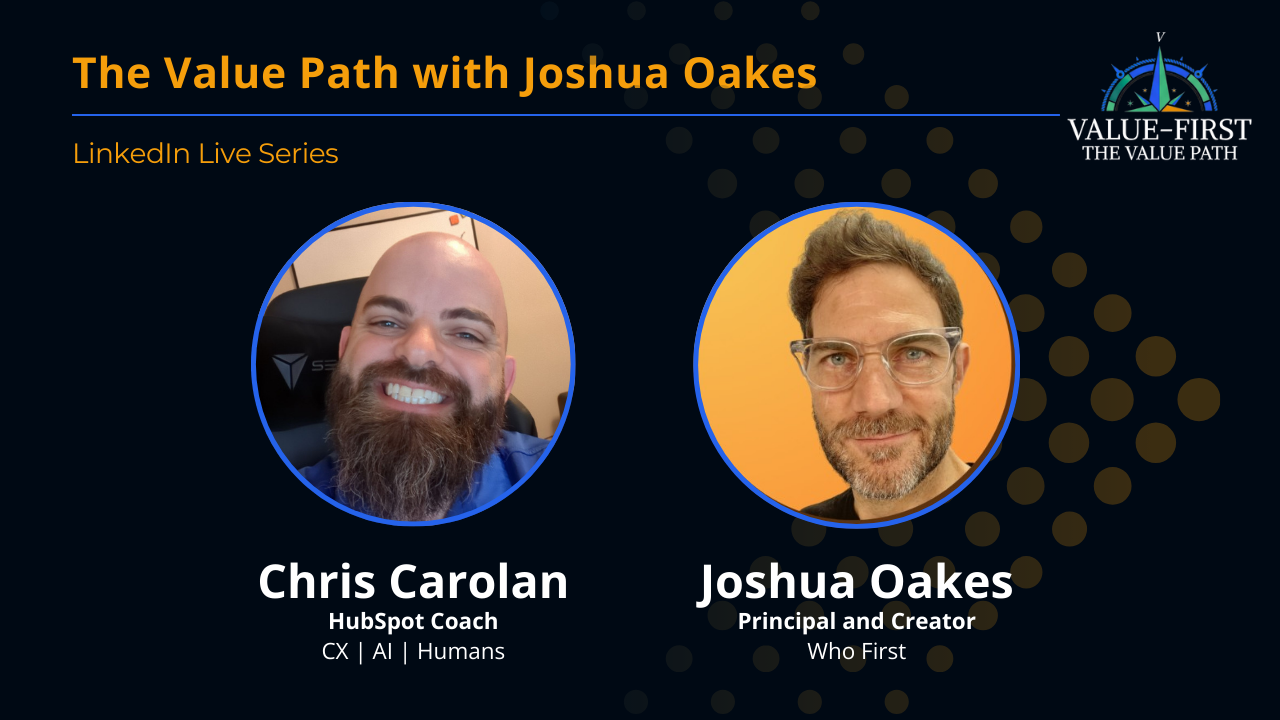
The Apr 16 episode framed the moment of crossing into Value Creator: potential trust becomes kinetic, or it doesnt. The work of Stages 1-4 either pays off in fluid transition or it doesnt.
But that episode was about the threshold. Today is about what happens after you cross it.
Value Creator is the most honest stage on the Value Path because its the first one where the relationship has nothing left to prove and everything left to deliver. Before Value Creator, every interaction was, in some sense, about whether to commit. Now the commitment is real. The check has cleared. The internal champion has spent reputation capital and won. And both sides have to answer a different question: now what?
The mantra of the stage is "I Must Create Value" — and the word that does the work is "must." It is not aspirational. It is not optional. The customer is now structurally obligated to make this investment pay off. They will explain it to their team, their leadership, their future self. The seller is now structurally obligated to enable that — not to sell more, not to upsell, not to "expand the relationship," but to make the original promise real.
Most go-to-market machinery is not designed for this. The CRM stage advances. The deal hits Value Activated. The handoff document gets emailed. The implementation team gets assigned. And the relationship intelligence — the months of context, the friction factors, the stakeholder map, the why behind the why — gets compressed into a paragraph and a calendar invite.
The Value Creator stage is where Joshua Oakes Friction Factors stop being theoretical. One-Way Friction is no longer hypothetical — the commitment is genuinely irreversible now, and the champion is living with that. Reputation Friction is no longer being predicted — its being adjudicated, in every team meeting, every status update, every quarterly review. Do Not Pass Go Friction has flipped from a barrier to a debt: the prerequisites that got cleared during the Buyer stage now have to deliver the outcomes that justified clearing them.
The signals of healthy operation in the stage are not what most teams track. Engagement in working sessions, not session attendance. Homework completion that proves the customer is doing the work between sessions, not just showing up. Questions that get more specific over time, not more general. Language that starts to shift — "your platform" becomes "our platform," "the project" becomes "the work." Decisions made independently between sessions, then brought back for refinement rather than approval.
The signals of unhealthy operation are quieter and more dangerous. The champion goes silent because theyre spending political capital and dont want to admit it. Sessions get rescheduled in ways that feel routine but cluster. Homework slips, then gets explained, then stops getting explained. The Unified Customer View — the living relationship picture — stops getting updated, because the people closest to the relationship arent sure what to write.
This is the stage where the Path TO Value either becomes the Path OF Value, or becomes a relationship at risk dressed up as an active customer.
Joshua Oakes and Chris Carolan unpack what the stage actually is, what it requires from both sides, and how the Friction Factors and the UCV operate when the question shifts from "are they buying?" to "are they creating?"
Keep learning
You just watched the work. Now build it.
The next step is doing it yourself — live, with people on the same path.
One signal-dense note when a new episode lands. No noise.