
Deal Tags: Building Buyer-Centric Intelligence in HubSpot
March 26, 2026
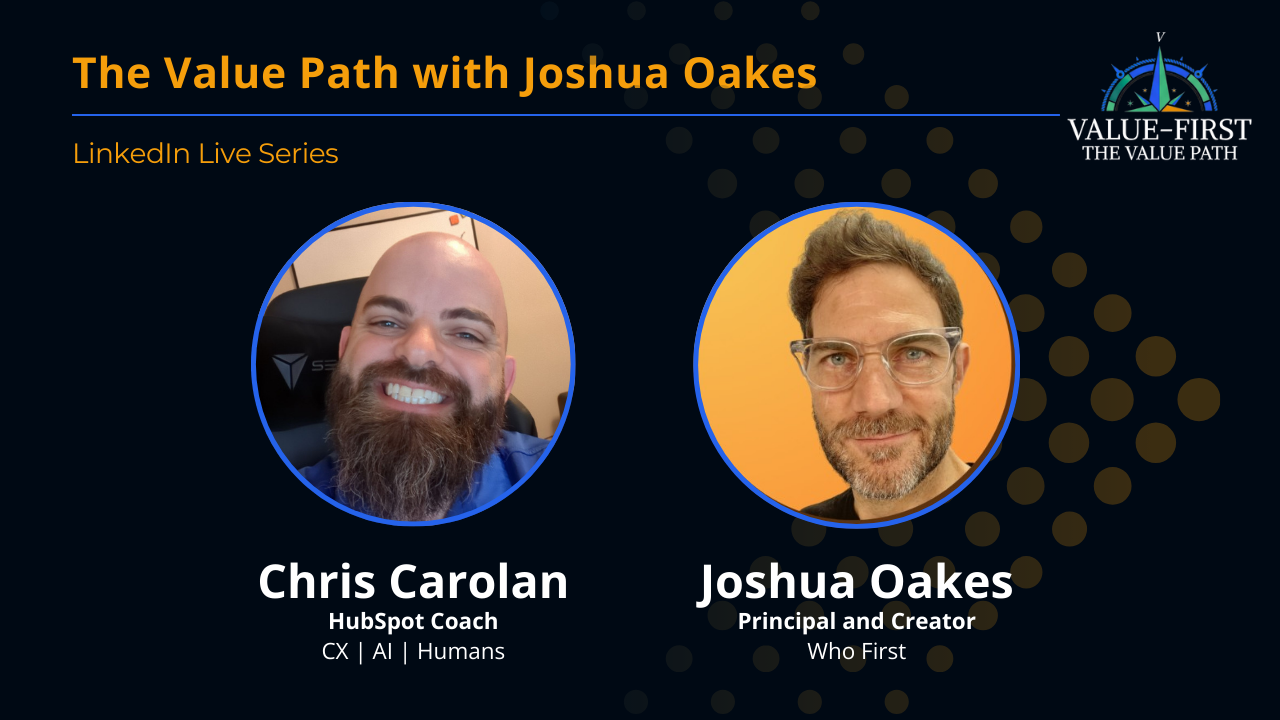
Ask a revenue team what they know about a deal, and they will describe their own pipeline. The stage. The probability. The expected close date. The source. They will tell you everything about their process and almost nothing about the human being inside another organization who is trying to build a case for change.
Deal Tags in HubSpot are one of the most underused configuration features on the platform. Most teams either ignore them entirely or use them to reinforce seller-centric labels -- "enterprise," "inbound," "Q2 priority." Tags that describe the seller's world. Today, Chris Carolan and Joshua Oakes build three Deal Tag configurations live in HubSpot, each designed to reflect the buyer's reality instead of the seller's forecast.
The first configuration uses Cross-Object tags via Lists to detect whether the right people are present on a deal. Not just "how many contacts are associated" but "which buying roles are represented." Using custom association labels on deal-to-contact relationships -- Champion, Economic Buyer, Decision Maker, Budget Holder, Evaluator -- you can build tags that show "Champion Present" in green or "No Champion Identified" in red. The demo walks through Meridian Healthcare, a deal with four stakeholders (Sarah Chen as Champion, Dr. Michael Torres as Decision Maker, Linda Park as Budget Holder, Kevin Nguyen as Evaluator), showing how list-based tags surface which roles are missing before a team even opens the deal record. This replaces HubSpot's native "Buying Role" dropdown on contacts, which Joshua does not recommend because it flattens a multi-dimensional relationship into a single field.
The second configuration is AI-backed property tags. Joshua demonstrates a tag driven by AI analysis that reads call transcripts and engagement data, extracting intelligence that compounds across conversations. Built for Call Catalyst, a franchise development company, this pattern uses Elephant transcript data to continuously update deal properties -- including spousal and partner disposition tracking, because franchise buying decisions rarely involve a single person. The configuration is simple. The intelligence it surfaces is not.
The third configuration brings the Value Path methodology directly into deal metadata: Buyer-Centric Friction Factor tags. These encode the forces Joshua's Who First framework identifies as the real determinants of deal movement. One-Way Friction -- is this deal carrying irreversibility risk that makes the champion hesitant? Reputation Friction -- is the champion staking professional credibility, and do they have what they need to protect it? Do Not Pass Go Friction -- are there prerequisite approvals blocking movement that have nothing to do with conviction? Pricing Friction -- is the stated budget concern masking something deeper? These are straightforward property-based tags, but they transform the deal record from a forecasting artifact into a relationship intelligence surface.
This episode lives in the Buyer stage -- Stage 4 of the Value Path, the final stage of the Path TO Value. The person at this stage has already been convinced. They have moved through Audience, Researcher, and Hand-Raiser. Their challenge now is translating personal conviction into organizational action. Every tag built today is designed to make that challenge visible to the team supporting them.
What you will walk away with: three distinct Deal Tag configuration patterns (list-based cross-object, AI-backed property, methodology-driven friction factors), the specific association labels and list logic to implement the buying committee pattern, and a clear understanding of why buyer-centric deal metadata outperforms seller-centric labeling in every context. Configuration over Customization -- no custom objects, no complex workflow automations. Native HubSpot, configured to reflect how humans actually make decisions.
Transcript
Keep learning
You just watched the work. Now build it.
The next step is doing it yourself — live, with people on the same path.
One signal-dense note when a new episode lands. No noise.